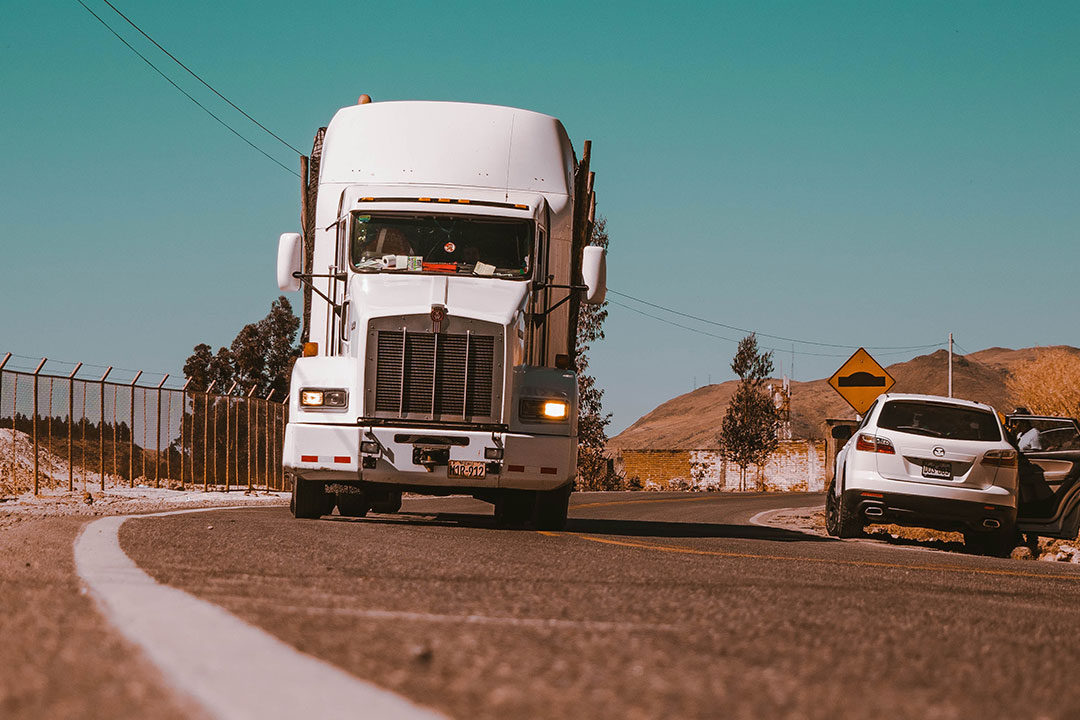
A recent incident involving wrong-way truck on a Missouri highway has raised serious questions about driver qualification, English proficiency requirements, and who may be legally responsible when multiple trucking companies are involved.
Incidents like this highlight something the public rarely sees: in commercial trucking, more than one company may be legally responsible, even when only one driver is behind the wheel.
Truck Accident Liability Is Often Multi-Layered
In a typical passenger vehicle crash, liability may be straightforward. In a commercial trucking case, however, responsibility can extend to several different entities:
1️⃣ The Driver
If a driver travels the wrong way, violates traffic laws, or fails to safely operate the vehicle, the driver may be personally liable.
Federal regulations also require commercial drivers to meet qualification standards. Under Federal Motor Carrier Safety Regulations (FMCSRs), drivers must be able to sufficiently read and speak English to:
- Converse with the general public,
- Understand traffic signs and signals,
- Respond to official inquiries,
- Complete required reports and records.
This requirement is not about where a driver is from — it is about safety. Commercial drivers operate vehicles weighing up to 80,000 pounds at highway speeds. They must be able to understand detour signs, construction warnings, hazmat placards, inspection instructions, and emergency directions in real time.
If a driver cannot meet those standards, that raises serious questions about whether proper screening and qualification procedures were followed. Motor carriers are responsible for ensuring their drivers meet federal qualification requirements before placing them behind the wheel.
2️⃣ The Motor Carrier (The Company Operating the Truck)
The motor carrier — the company operating under a USDOT number — is often responsible for:
- Hiring and screening drivers
- Ensuring driver qualification compliance
- Training and supervision
- Hours-of-service compliance
- Vehicle maintenance oversight
Even if the driver is labeled an “independent contractor,” federal law often treats the authorized motor carrier as responsible for the operation of the commercial vehicle.
3️⃣ The Tractor Owner
Sometimes the tractor (the power unit) is owned by a different company than the carrier operating it. If ownership, leasing arrangements, or maintenance failures contribute to a crash, that entity may share responsibility.
4️⃣ The Trailer Owner — Yes, They Can Be Liable Too
Many people assume the trailer owner has no responsibility if another company is hauling it. That is not always true.
A trailer owner may face liability if:
- The trailer had defective brakes, lights, tires, or structural components
- Maintenance was improperly performed or neglected
- The owner negligently entrusted the trailer to an unsafe operator
- A trailer interchange agreement created shared operational responsibilities
Even when the trailer owner is not directly negligent, its insurance policy may still apply.
💰 How the Trailer Owner’s Insurance Can Come Into Play
When a trailer is owned by one company but hauled by another, the trailer owner does not automatically escape involvement if a crash occurs. Commercial auto insurance policies often cover “owned” equipment, including trailers, and may extend coverage to others who are using that equipment with permission. That means the hauling carrier or driver could potentially qualify as an insured under the trailer owner’s policy, depending on the policy language and the nature of the arrangement between the companies.
Why This Matters
When a wrong-way semi makes headlines, the story often focuses on the driver. But trucking litigation is rarely that simple.
Questions that must be examined include:
- Who was the authorized motor carrier?
- Who owned the tractor?
- Who owned the trailer?
- Who was responsible for maintenance?
- Were federal qualification standards followed?
- What insurance policies are in place?
The presence of multiple companies and multiple insurance policies can significantly affect both accountability and recovery for injured victims.
Commercial trucking is a heavily regulated industry for a reason. When safety standards — including driver qualification requirements like English proficiency — are not met, the consequences can extend far beyond a single driver’s mistake.
Understanding how these layers of responsibility work is essential whenever a serious truck crash occurs.
Trucking cases involving multiple companies, equipment ownership issues, and federal qualification requirements can be legally complex. You can learn more about how these claims are investigated on our Missouri trucking lawyer page.